
Creating a More Supportive Travel Environment for Families — Insights from Guest Surveys and Trial Stays on How Travel Can Expand Children’s Possibilities.
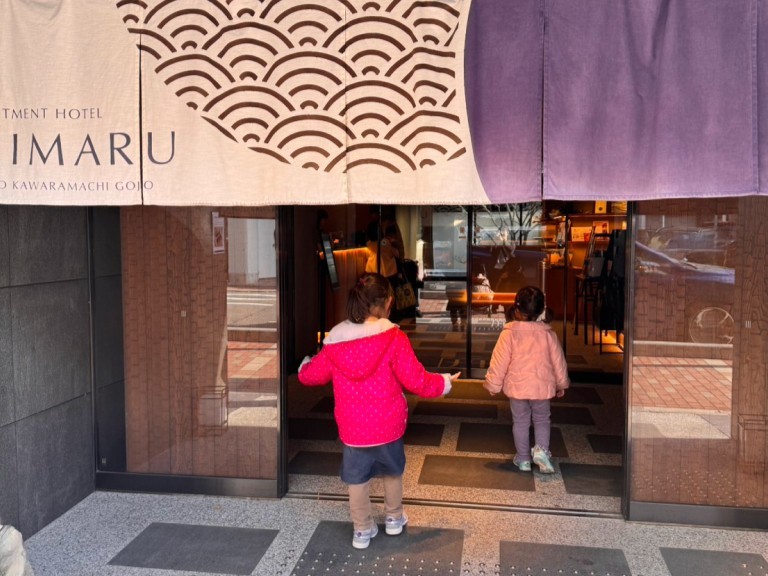
Cosmos Hotel Management Co., Ltd., in collaboration with Cosmos Initia Co., Ltd. and STYZ Inc.’s inclusive design studio CULUMU, conducted a survey of families with children who have developmental differences or sensory sensitivities, as well as a small-scale demonstration trial at MIMARU properties to create a more supportive environment. The initiative aims to help build a society where these children and their families can travel with greater peace of mind and enjoyment.
Developmental differences refer to individual characteristics, such as strengths and challenges in learning, sensory experiences, and communication styles, that arise from differences in how a person’s brain and senses naturally work. There is growing interest in creating environments that respect these diverse characteristics and allow each person to feel safe, comfortable, and able to fully express their abilities.
As part of this initiative, we analyzed feedback from families with lived experience, including their specific experiences when going out and staying at accommodation facilities. The study identified common challenges that may arise during travel, the practical measures families take to address them, and the direction that accommodation providers can take in creating more supportive environments.
These insights will be applied to future services and spaces, as we continue working toward a society where all kinds of families can enjoy traveling together with confidence and peace of mind.
■ Travel is both a “pleasure” and a “challenge.”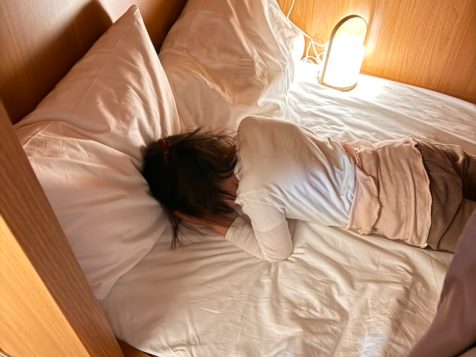
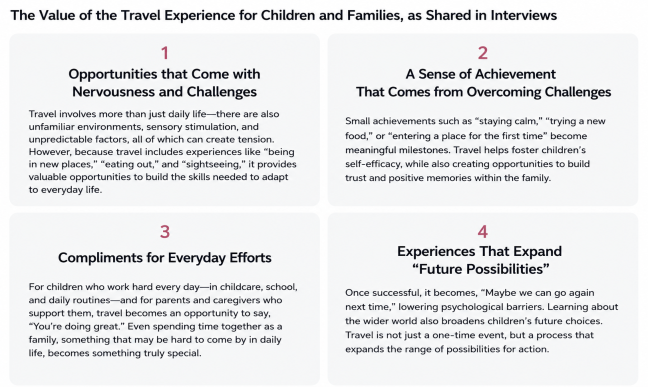
For children with developmental differences and their families, travel has a special significance. Preliminary interviews revealed that visiting new places and facing changes in the environment can be a meaningful “challenge” for children. Overcoming these experiences is often viewed as a successful achievement that can help build their confidence.
Families also see travel as a valuable opportunity to create shared memories away from their everyday routines. Many families expressed that, despite the challenges, they still want to travel together.
Meanwhile, a survey conducted among families with lived experience showed that the challenges they face when traveling or going out are not limited to children’s individual characteristics, such as becoming unsettled by changes in the environment or having difficulty adapting to changes in plans. Rather, the mental and physical burden on parents and caregivers, along with concerns about being watched or judged by others, were identified as significant barriers.
As a way to cope, many families reported making adjustments such as ending outings early and avoiding overexertion. These findings reveal the pressing reality that, even during much-anticipated outings, families often feel compelled to restrict their activities.
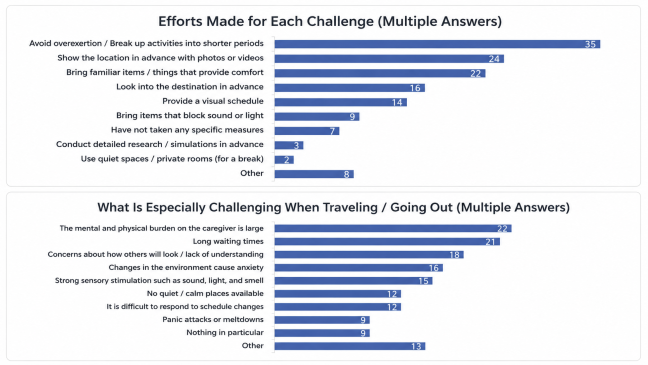
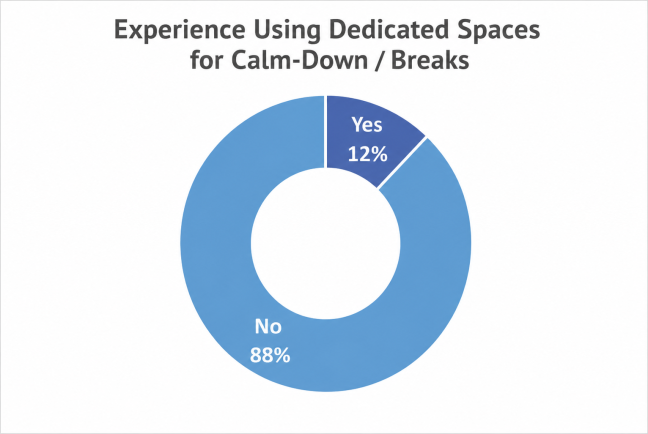
(Web-based survey using opportunity sampling, 64 valid responses, conducted by STYZ Inc. from February to March 2026)
■ The Potential of Hotels: Becoming a Safe and Supportive Base for Families
Traveling in an unfamiliar destination often comes with many unpredictable situations. This is why accommodation facilities are expected to serve not only as places to sleep, but also as secure and supportive bases where families can ease the fatigue and tension they experience outside and return to a sense of calm and comfort.
Based on this preliminary research, the main challenges faced by children with developmental differences and their families during travel can be summarized into the following five areas.
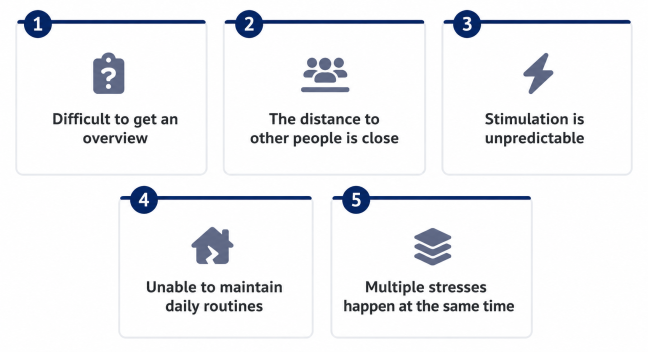
At first, these challenges may appear to be separate issues. However, they are all closely connected to how each child interacts with their environment. Instead of creating a fixed space designed for specific behaviors or needs, we believe that providing flexible spaces and choices can help children and families adjust more easily and feel more comfortable in their own way.
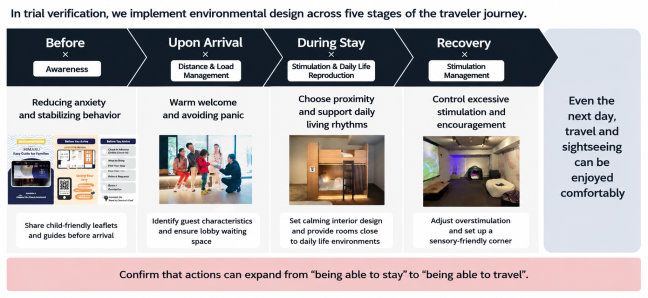
Based on these findings, we considered measures that could be implemented relatively easily in existing accommodation facilities, and conducted trial stays as a demonstration experiment with families with lived experience at MIMARU Kyoto Kawaramachi Gojo and MIMARU Kyoto Shinmachi Sanjo. The trial focused primarily on two approaches: providing information and creating supportive spaces.
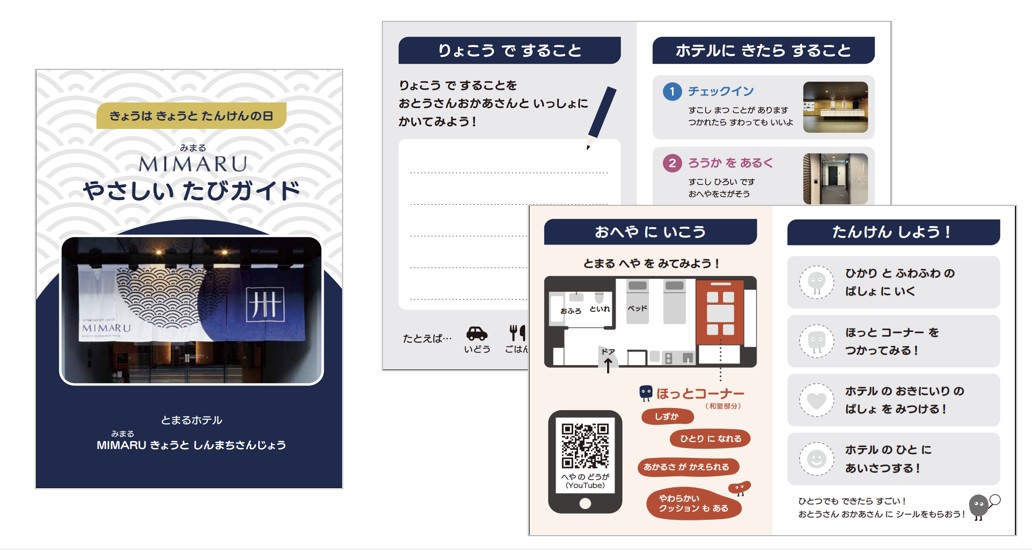
1. Information Approach: Helping Families Turn Anxiety into Excitement with a Pre-Arrival Leaflet
A pre-arrival leaflet was created and sent to families before their trip, featuring photos that introduced the flow of the stay, the guest room, and dedicated spaces. Following the trial, families commented that being able to understand what to expect in advance helped their excitement outweigh their anxiety.
The trial confirmed that providing visual information ahead of time and helping families gain a clear sense of what to expect can contribute to children’s behavioral stability and a greater sense of reassurance for families.
2. Space Approach: Providing Choices Between Places to Rest and Places to Let Off Energy
In the guest rooms, we set up a “Hotto Corner,” or calm-down area, where children could rest quietly while reducing exposure to external stimulation. In the shared area, with the cooperation of Kos International Co., Ltd., we incorporated the concept of “Snoezelen,” an environmental approach that originated in the Netherlands, and created a “Light and Soft Space,” or Snoezelen Corner, using Snoezelen items to gently stimulate the five senses.
The trial showed that children were able to choose where they wanted to spend time and take actions to regulate their own condition. Families also reported that the spaces helped increase their sense of security during the stay and reduce stress.
As each child’s characteristics and support needs were shared in advance, families commented that it was easier to approach staff when they needed assistance, and that they felt reassured knowing that their situation was understood.
The findings suggest that discreet support and attentive observation by staff during the stay helped create a sense of security, allowing families to spend time comfortably without having to force themselves to adapt to the environment.
These forms of support may contribute to a more comfortable stay not only for guests with developmental differences, but also for many other guests. The findings suggest that reducing stress and creating a sense of reassurance can be achieved through both thoughtful environmental design and supportive interactions with staff.
■Helping More Families Experience the Value of Travel
-
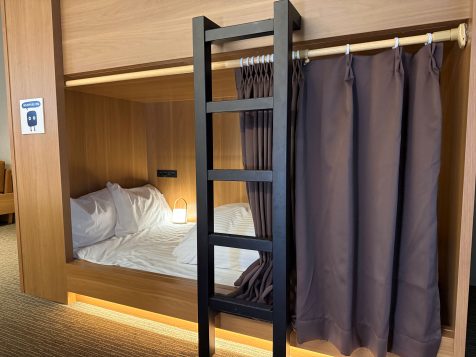
- Clam Down Area

■Helping More Families Experience the Value of Travel
These challenges and considerations are by no means limited to people with developmental differences. Fatigue and stress can affect anyone while traveling, and appropriate information, together with thoughtful environmental design, can contribute to a greater sense of comfort for all guests. 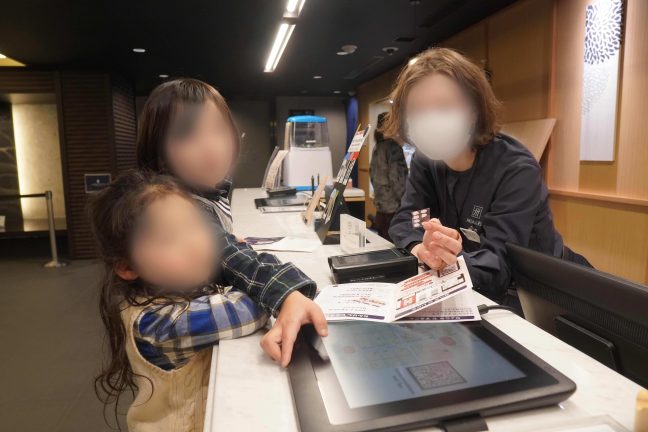
Through this research, we recognized that travel is an experience each person approaches within their own circumstances. For children with developmental differences and their families, travel can be both a “challenge” in facing changes in the environment and an opportunity for each experience to build confidence and encourage the next step forward.
For this reason, we believe that by adapting the environment, we can help reduce the barriers that make families feel travel is not possible, and instead help create a sense that travel may be within reach.
Drawing on the insights gained from this research, MIMARU will consider conducting internal study sessions and making further improvements to its services. Through these initiatives, we will continue contributing to the creation of an environment where diverse families can travel together with peace of mind and enjoyment.
■ PR STORY Introduction
Further details about this research, including feedback from the families involved and the background of the project, are available in the following PR TIMES STORIES.
・Part 1:https://prtimes.jp/story/detail/qb28Z0SK7qx
This article explains how the perspective of inclusivity began to take shape within the real estate business, as well as the background of the initiative and the workshop conducted by Cosmos Initia.
・Part 2:https://prtimes.jp/story/detail/yxJYngsD21B
Based on preliminary research with families, including interviews and surveys, this article explores the strong feelings families have about travel. It also explains how these findings informed the planning process, together with the thoughts and objectives behind the MIMARU Developmental Differences Project.
・Part 3:https://prtimes.jp/story/detail/ZxWXRzUJ4Vr
This article presents the specific solutions implemented at MIMARU properties in response to the five structural challenges faced by children with developmental differences and their families while traveling. It also shares authentic feedback from the families who participated.